
🇵🇪 Peru & The Inca Trail – April 2003
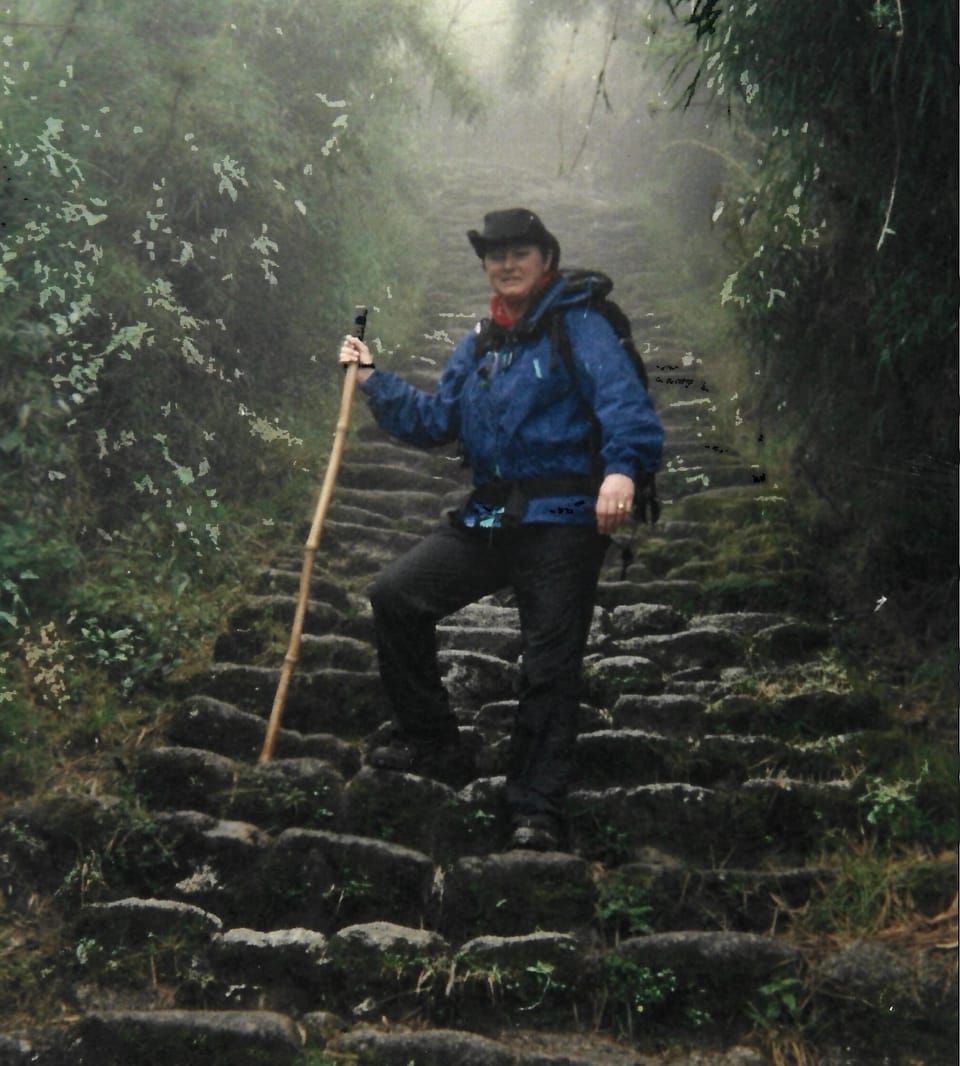
This was my first real adventure. I’d never done anything like it before, and I remember feeling both excited and slightly out of my depth. Looking back now, I can see how much that trip opened my world — and how taking one brave step can lead to memories that stay with you for decades.
✈️ Travelling Out – 8 April 2003
We flew out on 8 April, starting with a short hop to Amsterdam before the long flight across to Newark. It turned into one of those big travel days where you feel like you've spent half your life in airport corridors, watching departure boards and waiting for connections.
By evening we landed in Lima. We grabbed a taxi into the city and found a small hotel for the night — nothing fancy, but clean, friendly and exactly what we needed after such a long day.
The next morning we were back at the airport for our flight up to Cusco. Stepping out at over 3,400 metres was a shock to the system. Even crossing the tarmac felt like climbing a hill.
Our little hotel in Cusco was chosen more by luck than planning, but it was perfect — simple, clean and only a few minutes from the main square.
🏙️ Settling into Cusco
Cusco was lively, noisy and full of colour — and the altitude made everything feel twice as hard. Even a gentle incline had us stopping for breath. We spent our first day slowly getting our bearings and trying not to overdo it.
Over the next couple of days, we settled into the rhythm of the city and started to acclimatise properly. Cusco sits at around 3,400 metres, so even a short walk or a set of steps left us puffing at first.
We took things slowly — plenty of water, short strolls, and lots of pausing to catch our breath. In between all that, we sorted out our trek plans with Norma and Alberto, found our feet, and gradually adjusted to life at altitude.
The constant stream of people selling postcards, shoeshines and pretty much everything else became part of the backdrop, and by the time we set off on the trail we felt far more ready for what was coming.
By the time the trek briefing rolled around, we felt as ready as you can feel at 3,400 metres.
🥾 The Inca Trail – Four Days to Machu Picchu
Day 1 – A Steady Start
We started with a bus ride to the trailhead and that familiar feeling of right then, here we go. Richard had sorted porters for our bags — Army life had clearly prepared him for things like this. And off we went, no lightweight walking poles in those days.
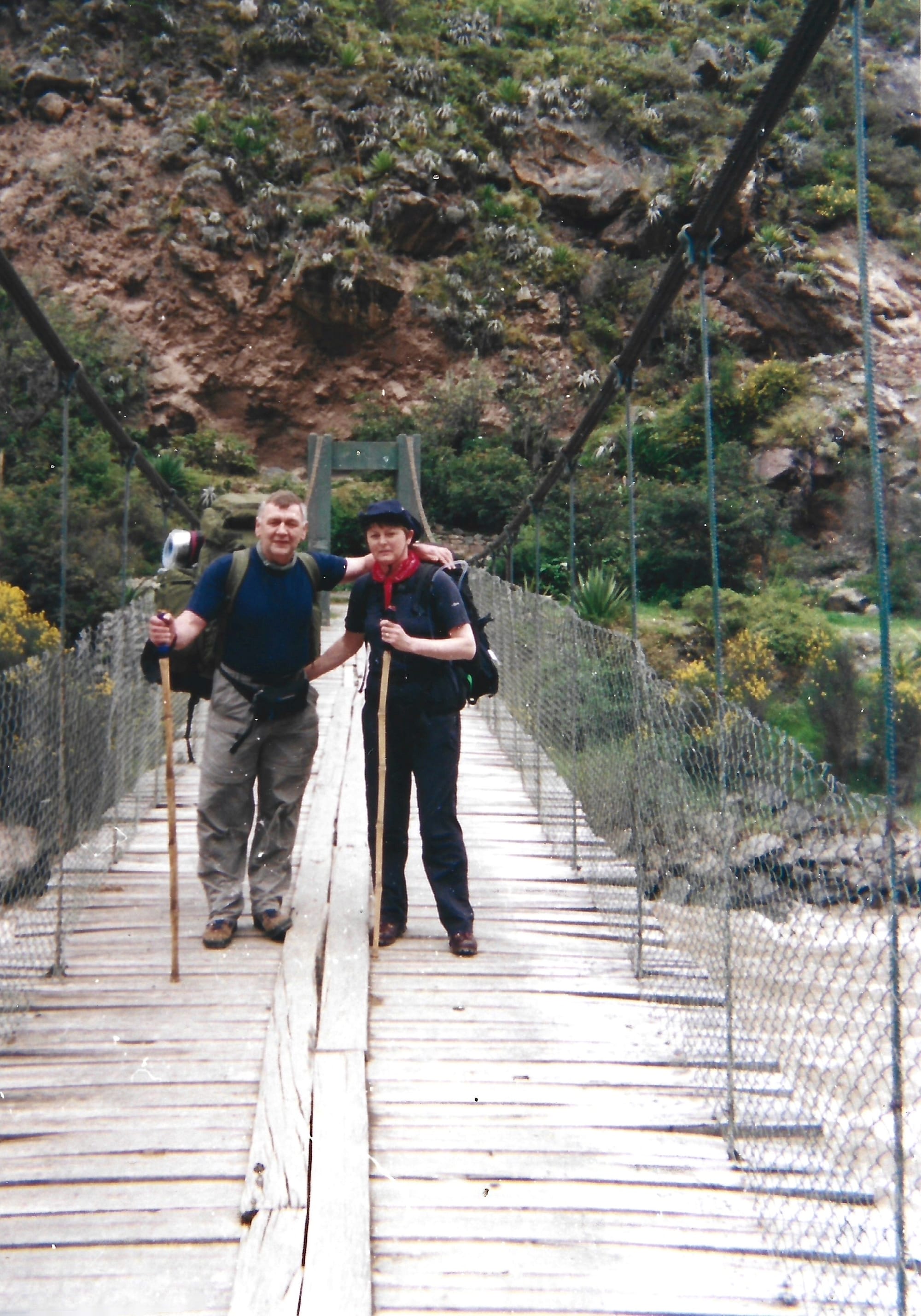
There were trekkers from all over — Argentinian, American, Dutch, Irish, German and Israeli — most of them in their twenties. I was 45 at the time and thought I was the “old one,” which makes me laugh now. No age at all.
The trail eased us in: dusty paths, small villages, and those steady climbs that don’t look much until you’re actually doing them. The altitude made every uphill feel a bit harder than expected, so we kept things slow and steady. We covered around 14 km and reached camp before dark.
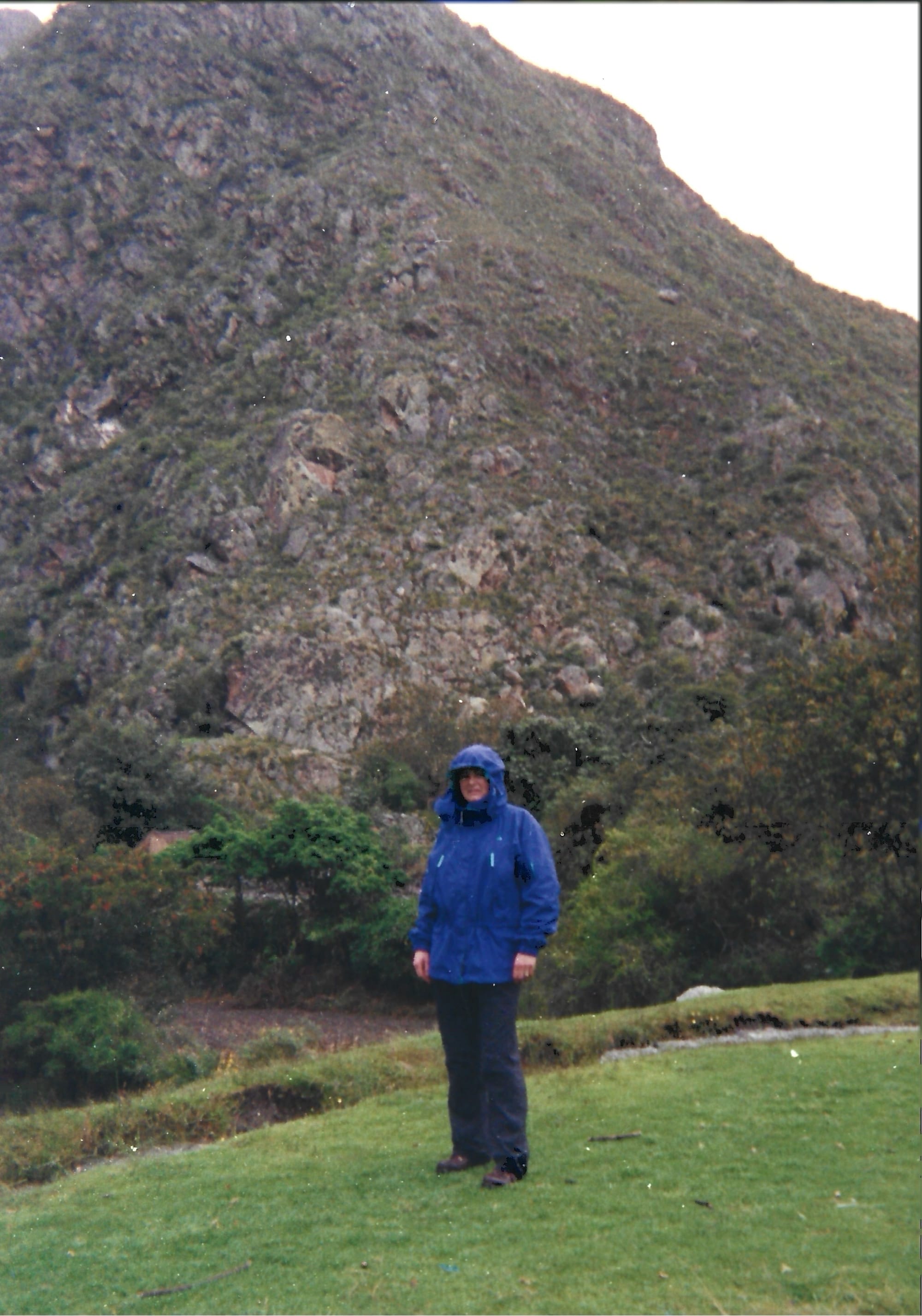
The tents were already up and waiting for us when we arrived. Campsites along the trail were basic — a cold wash basin, no showers, and toilets of varying success — but after a full day on our feet, it all felt perfectly fine. What amazed us most were the porters: flying past us with enormous packs, yet somehow managing to have camp set up, water boiled, and everything ready long before we appeared. Absolute heroes of the trail.
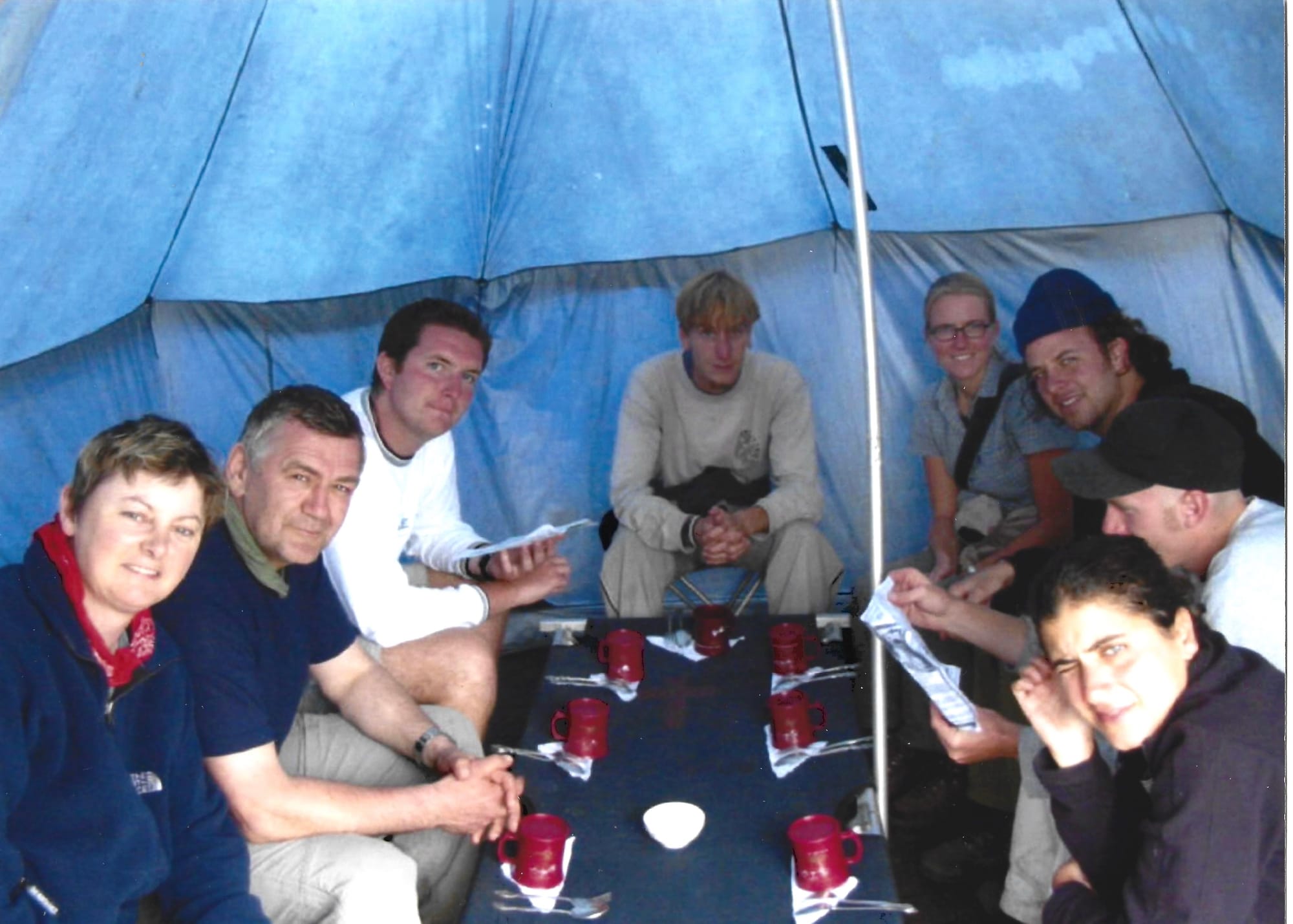
There was something reassuring about that first night under canvas — tired legs, simple food, and the feeling that the adventure had truly begun.
Before starting Day Two, here’s a little snapshot of the full Inca Trail…
💜 Inca Trail — At a Glance
A quick overview of what the trip involved:
- Total distance: around 42 km (26 miles)
- Highest point: Dead Woman’s Pass — 4,215 m
- Total ascent: over 2,000 metres
- Stone steps: thousands (no one agrees on a number!)
- Daily walking: usually 6–9 hours
- Terrain: a mix of valley paths, steep staircases, and cloud forest
Numbers are one thing… walking it is another.
Day 2 – The Big Climb (Dead Woman’s Pass)
Day Two was the one everyone talks about — the tough climb up to Dead Woman’s Pass, the highest point on the trail. Some of the younger trekkers seemed to breeze past me in jeans and trainers, chatting away as if they were out for a quick walk, while I was stopping every twenty-five steps for breath.
The distance isn’t huge — only around six or seven kilometres — but you’re climbing more than 1,200 metres in one go, from roughly 3,000 metres up to 4,215. To put that into perspective, it’s a bigger height gain than climbing Snowdon from sea level. The air thinned with every switchback, and the path seemed to tilt a little steeper each time I looked up.
As we gained height the landscape shifted: the open valley floor gave way to long stone staircases carved into the mountainside, with rugged scenery and huge views dropping away behind us.
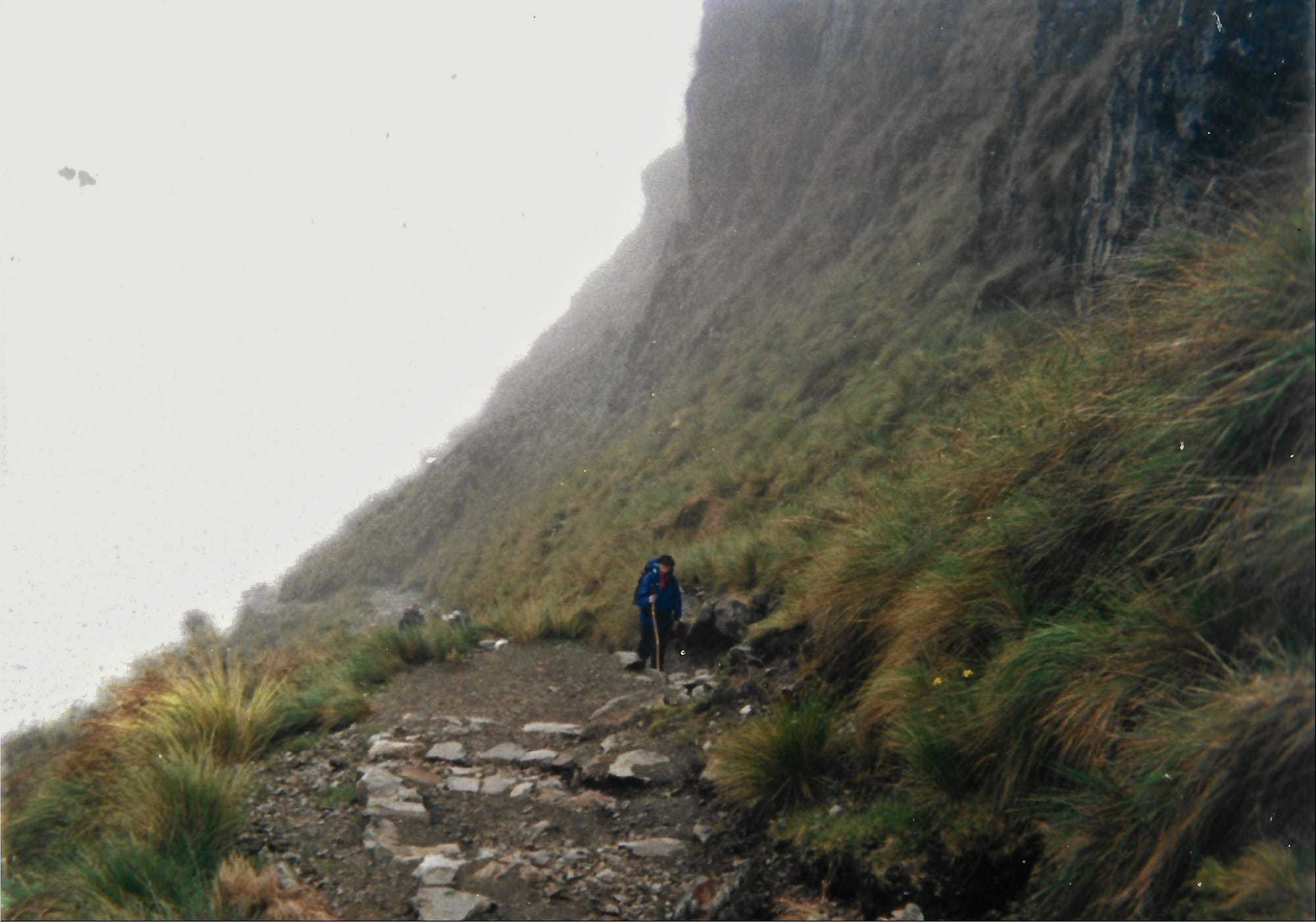
Towards the top, Peruvian women in full traditional dress were waiting, selling Coca-Cola and chocolate bars — an incredible commute for them every day. The porters were even more impressive, sprinting past us carrying gas bottles, food supplies and people’s luggage, all in sandals.
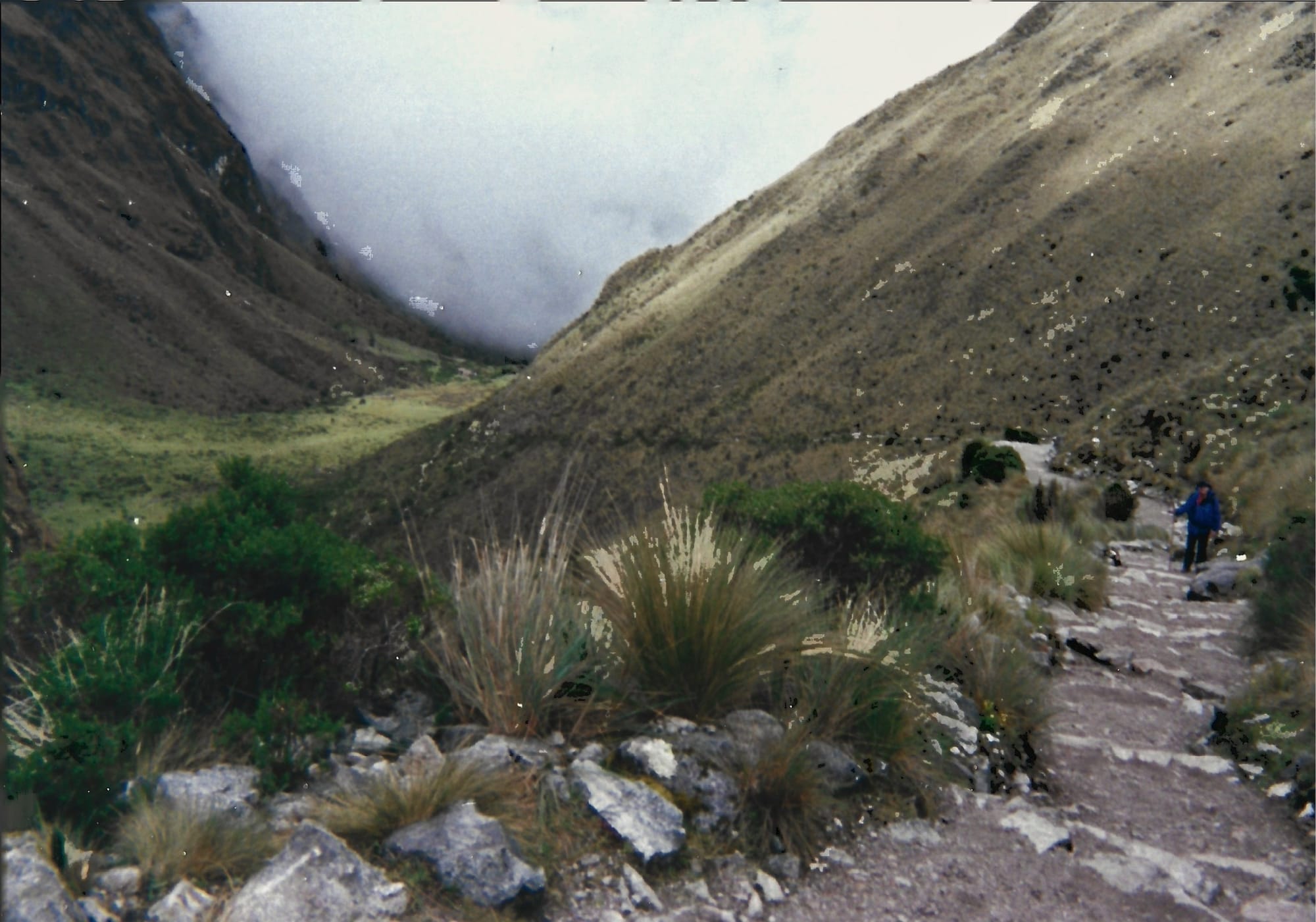
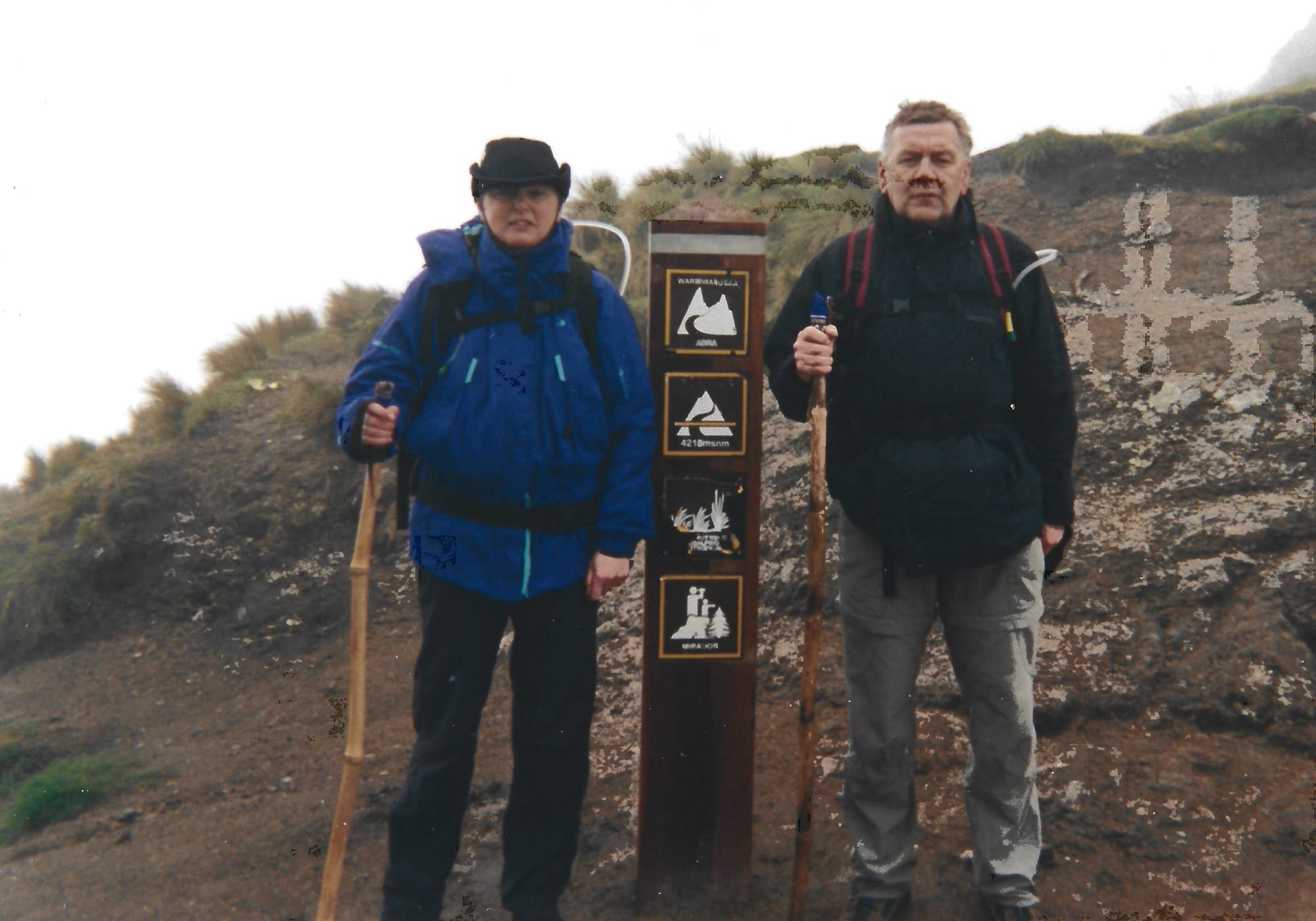
We finally reached the top of Dead Woman’s Pass, and it felt like a real achievement. We didn’t stay long — it was cold, windy, and the cloud kept rolling in, snatching away the view every few seconds. After a quick photo we started the descent, which turned out to be almost as tough as the climb. Hundreds of uneven stone steps dropped straight down into the next valley, hard on the knees and just as demanding on the concentration.
We took our time, stopping now and again to look back at how far we’d come. Campsite Two finally came into sight late in the afternoon, tucked into the bottom of the valley. The tents were already up, our porters somehow managing to run past us earlier carrying half the kitchen on their backs.
Dinner was simple but tasted amazing after such a long day. By eight o’clock we were both flat out in our sleeping bags — tired, cold, but genuinely proud of ourselves. Day Two had a reputation, and it definitely lived up to it.
Reaching Dead Woman’s Pass showed me that you don’t have to be the youngest or the fittest to get there — just stubborn enough to keep taking the next few steps.
Day 3 – Up, Down and Everything In Between
None of us slept well, and poor Lilliana from Argentina had been sick most of the night. She and her partner were lovely, and it was awful seeing her struggle.
The morning climb up to around 3,860 metres was much easier on the legs thanks to the scenery — wide, open Andean hillsides with long sweeping views.
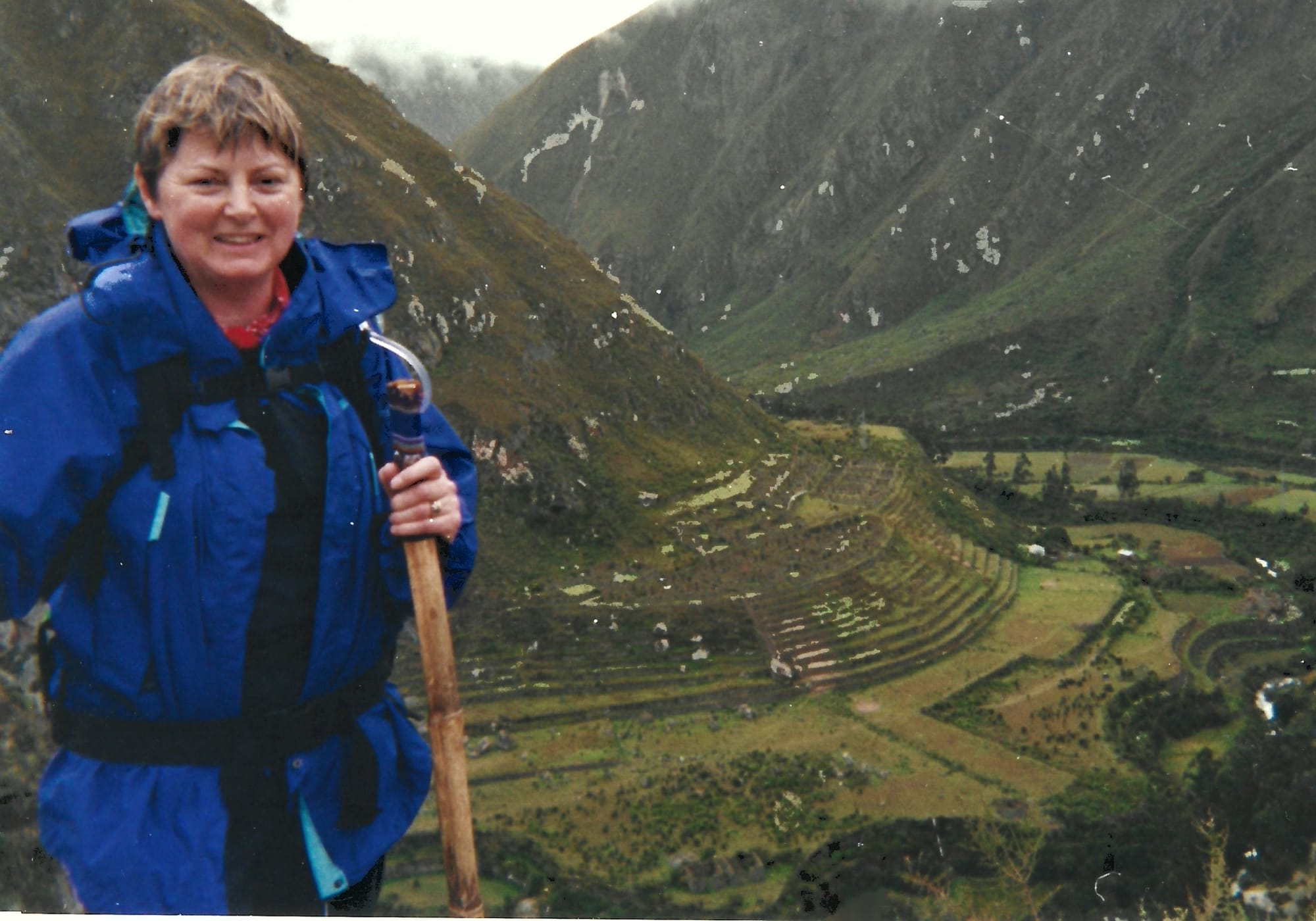
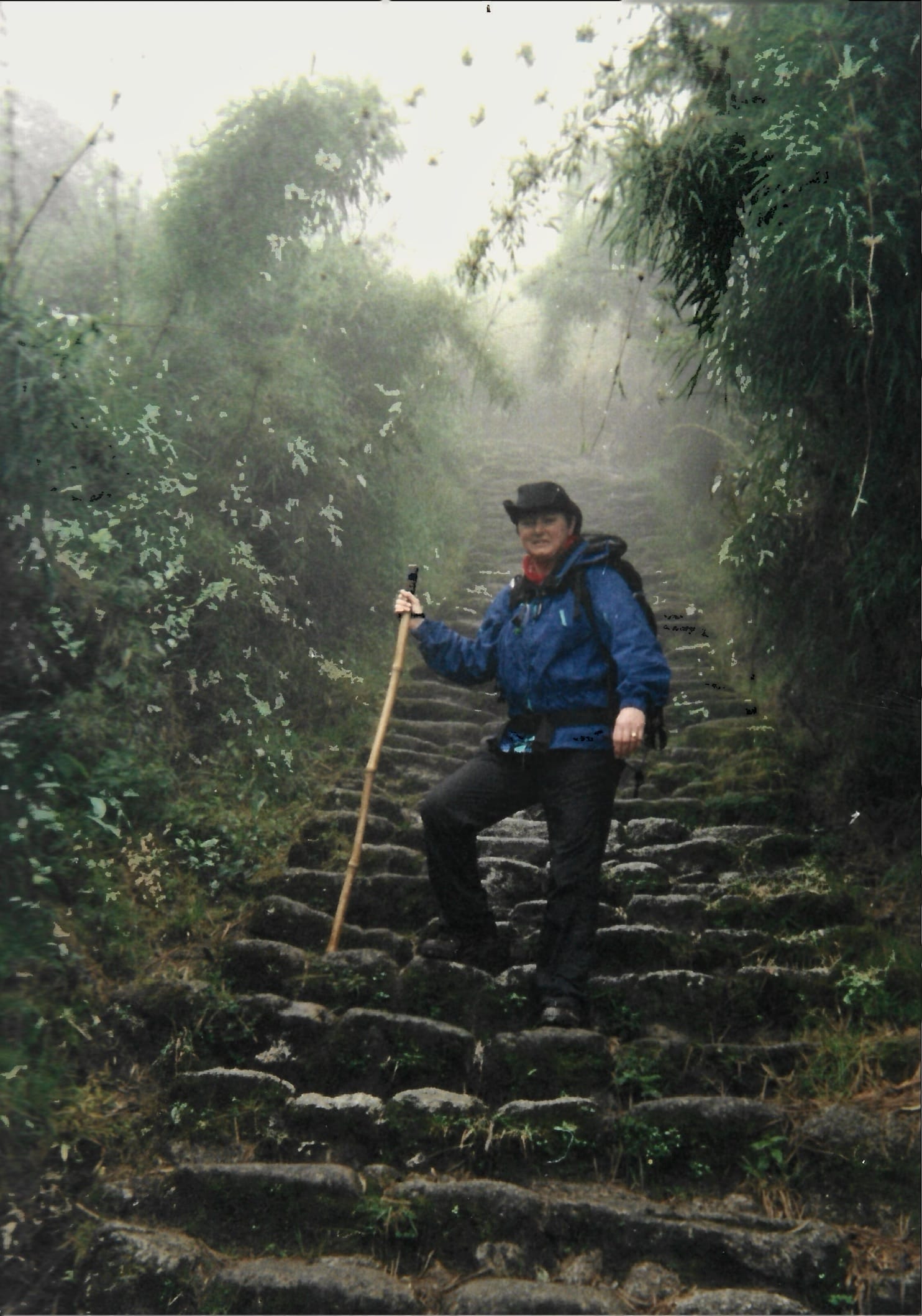
Every now and then the path dipped into pockets of cloud forest: cooler air, thick greenery, mossy rocks and that earthy smell you only get in damp mountain places.
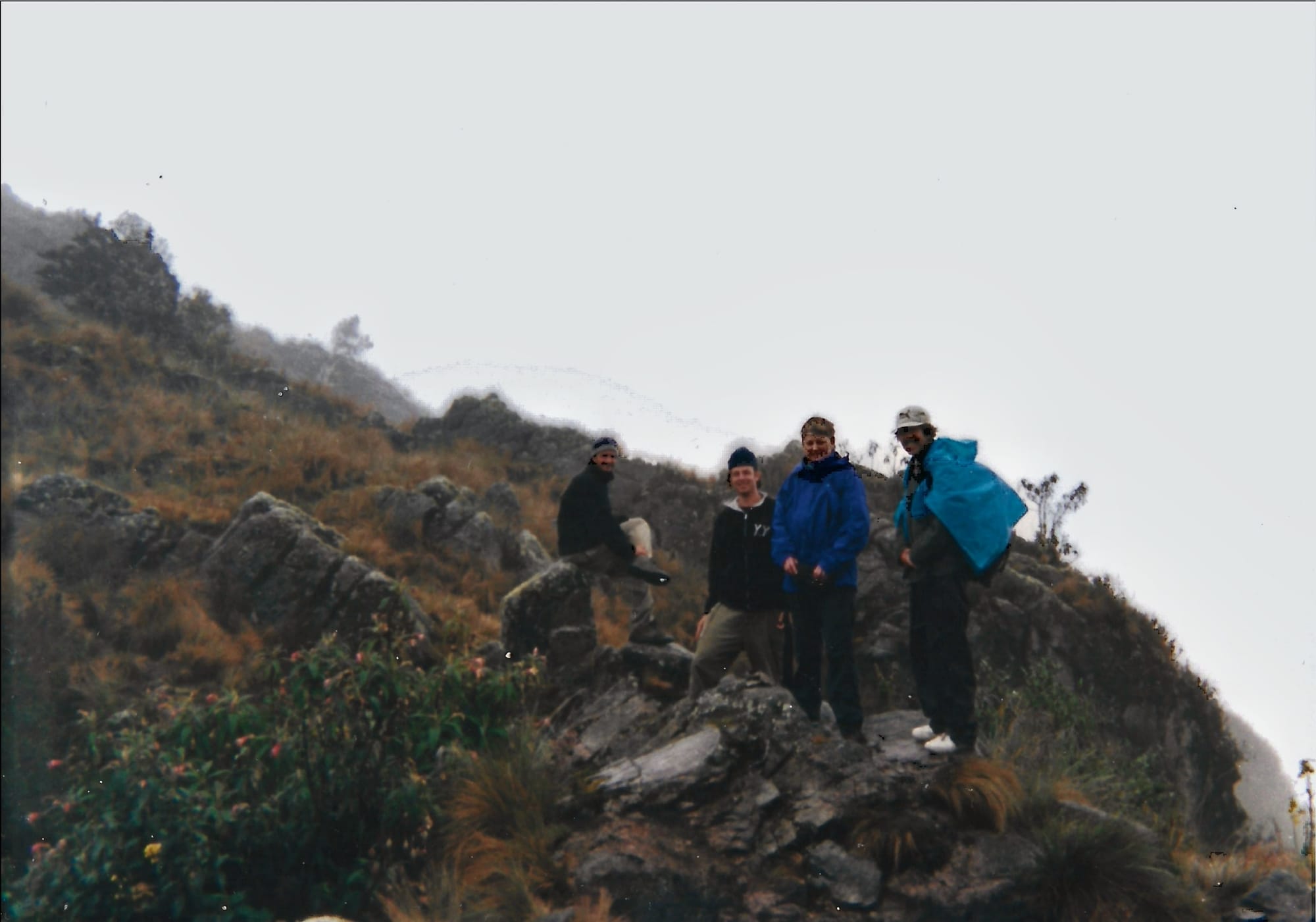
After reaching the high point of the day, it was mostly downhill — which was tough in its own way.
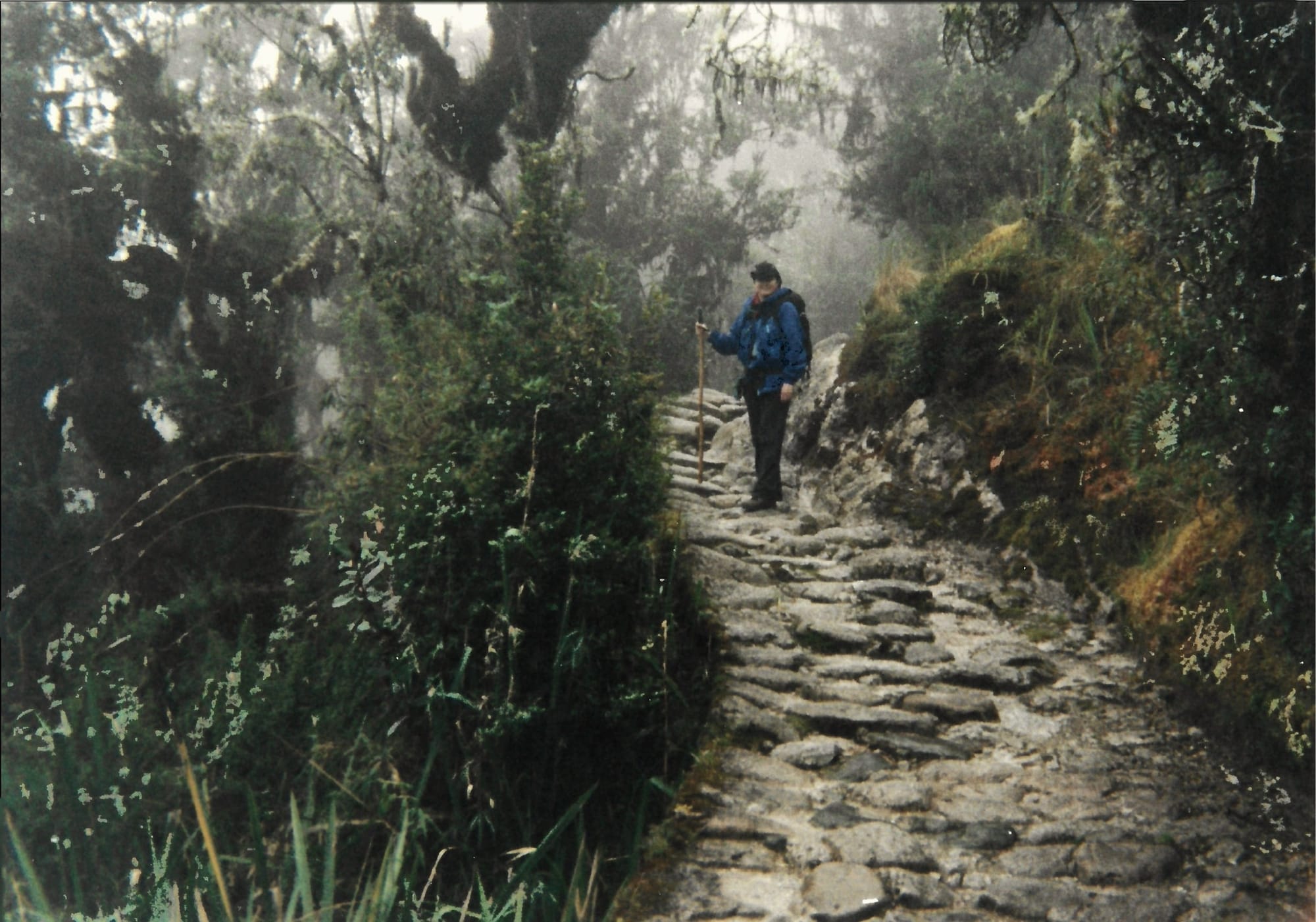
By the afternoon, Lilliana and her partner were running low on water, and thankfully Richard had water-purifying tablets and sorted them out.
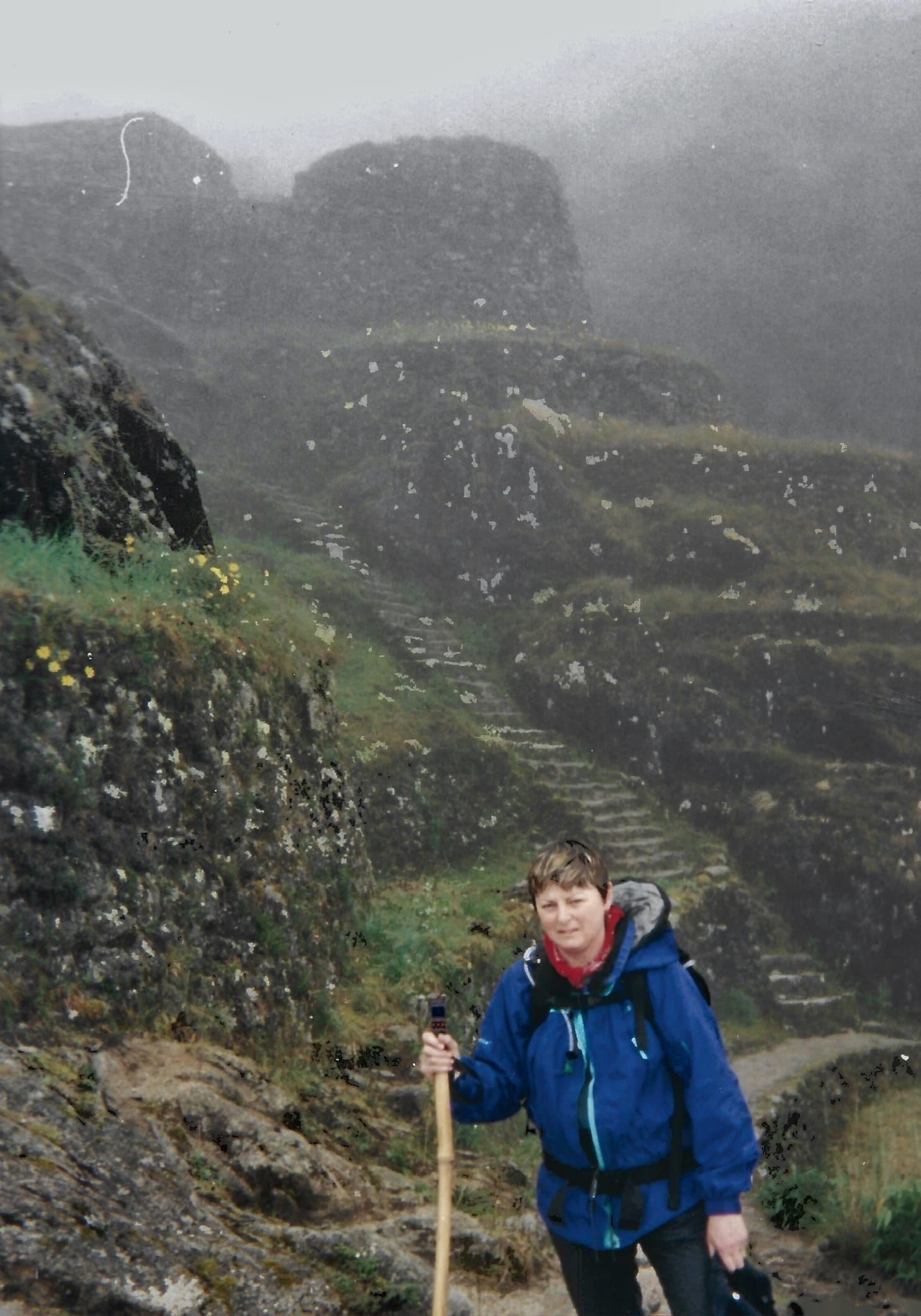
The descent was around three and a half hours of continuous stone steps, all different sizes. Hard on the knees and hard on the concentration. We took it steadily and all reached camp safely.
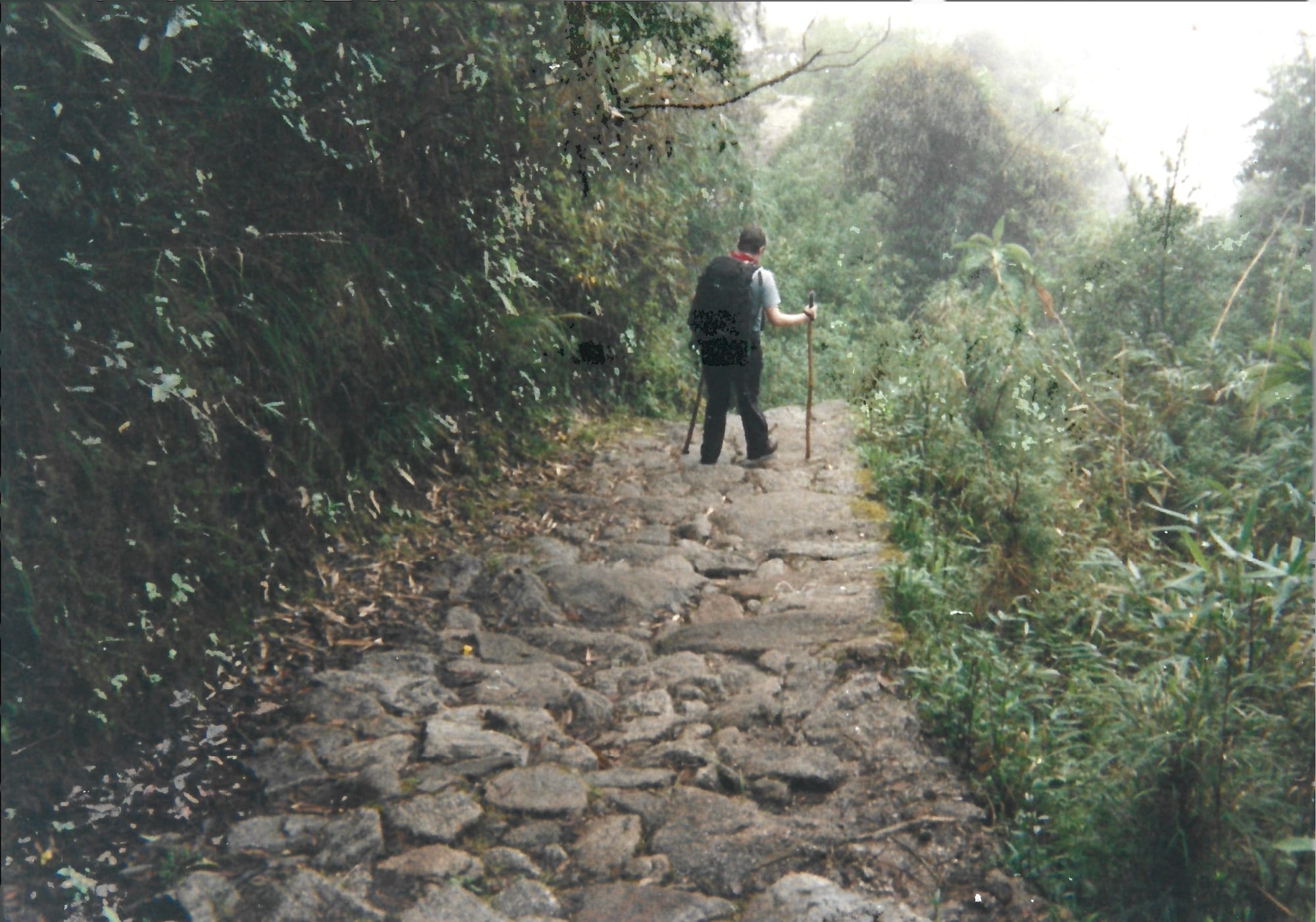
The surprise came when we found a solid little bar building at the campsite, full of travellers. After hours of mountains and silence, it felt surreal — noisy, warm and full of life. We didn’t need much convincing; a few beers later, we headed back to the tents early.
The rainforest wrapped around us all day — mist, stone steps, and that soft sound of running water somewhere below. Hard going at times, but still a beautiful place to walk.
Day 4 – Machu Picchu Morning
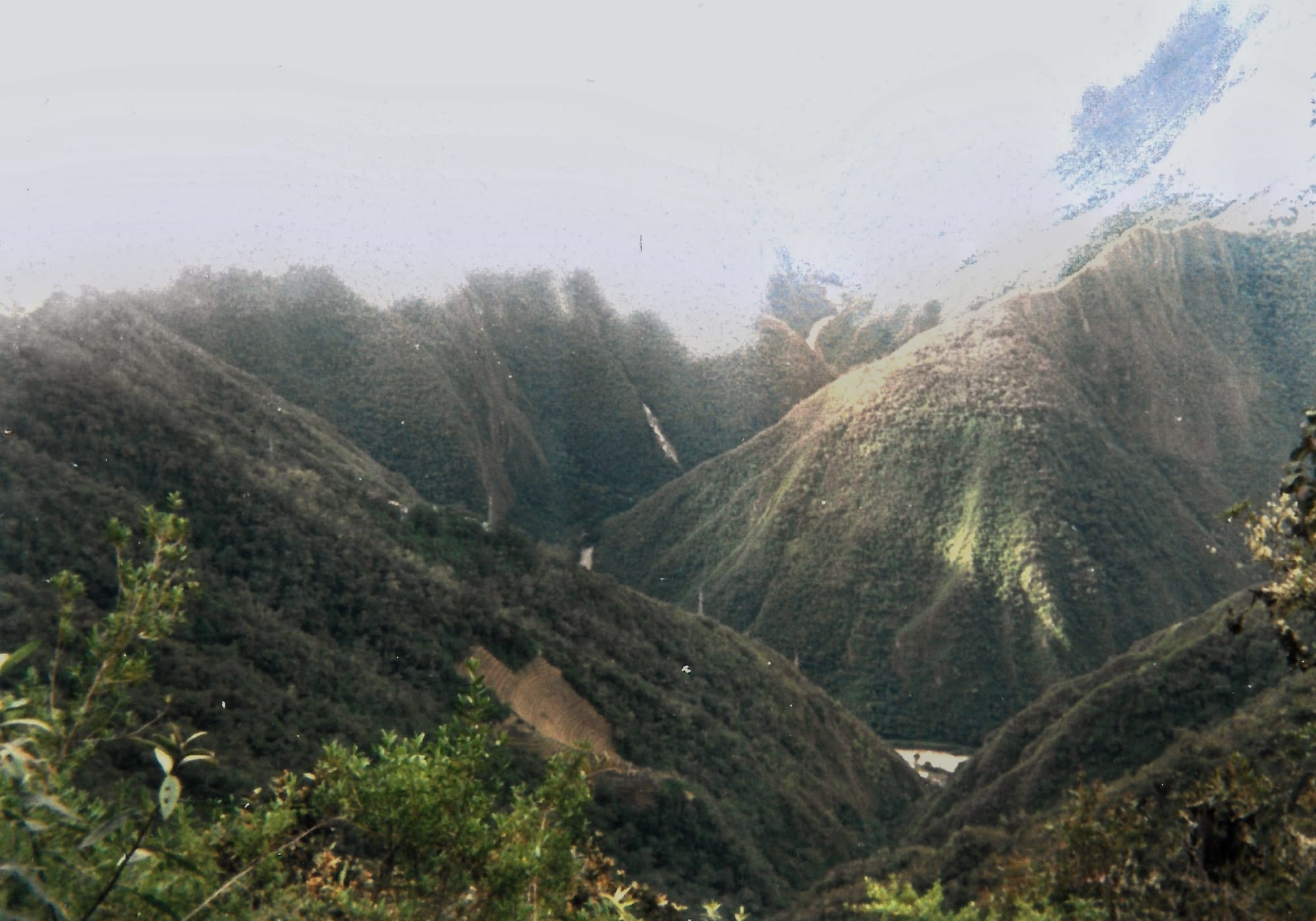
We were up at 4am after another night of broken sleep. It had poured down overnight but stopped just as we set off. In the half-light the trail wrapped around the mountainside, and as we walked the valley slowly opened up beneath us — deep folds of green with the river threading its way far below. After three days in the clouds, it felt good to see big views again.
We reached the Sun Gate around sunrise, but it was completely misted over — we couldn’t see a thing. The rainforest woke up around us at 6am, a wall of noise from birds, insects and everything else. We didn’t mind the lack of a view — it was still magical to stand there knowing Machu Picchu was somewhere underneath that blanket of cloud.
We went down into the town for a much-needed coffee, then walked back up with Umberto, our guide, around 8:30am — and that’s when the mist suddenly lifted. One moment nothing, the next moment Machu Picchu spread out below us, terraces spilling down the mountainside and the whole city glowing in the first proper light of the day. Absolutely unforgettable.
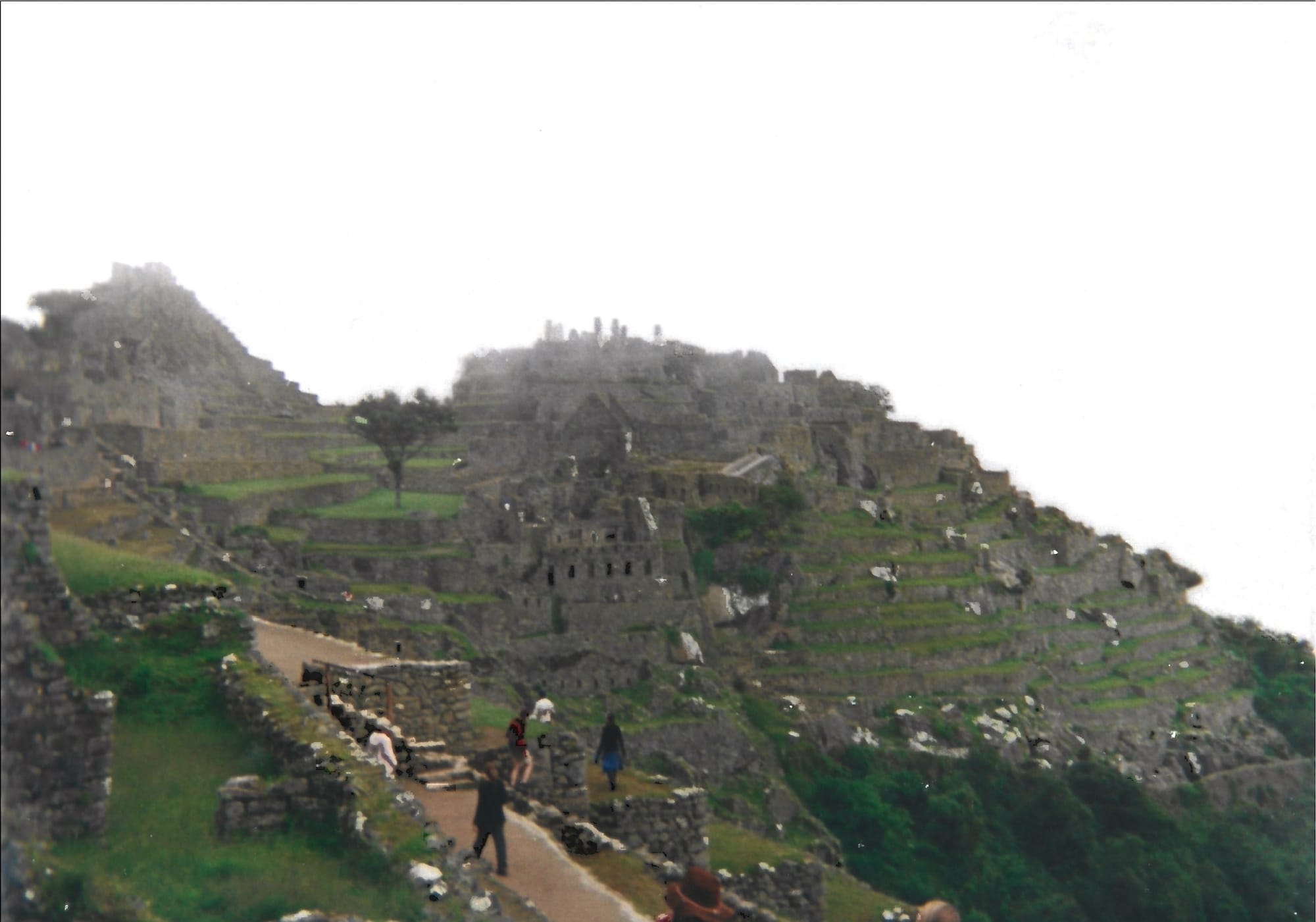
We spent the next few hours wandering through the site, soaking up everything Umberto showed us — the storage houses, the terraces, and the ceremonial areas carved straight out of the mountain.
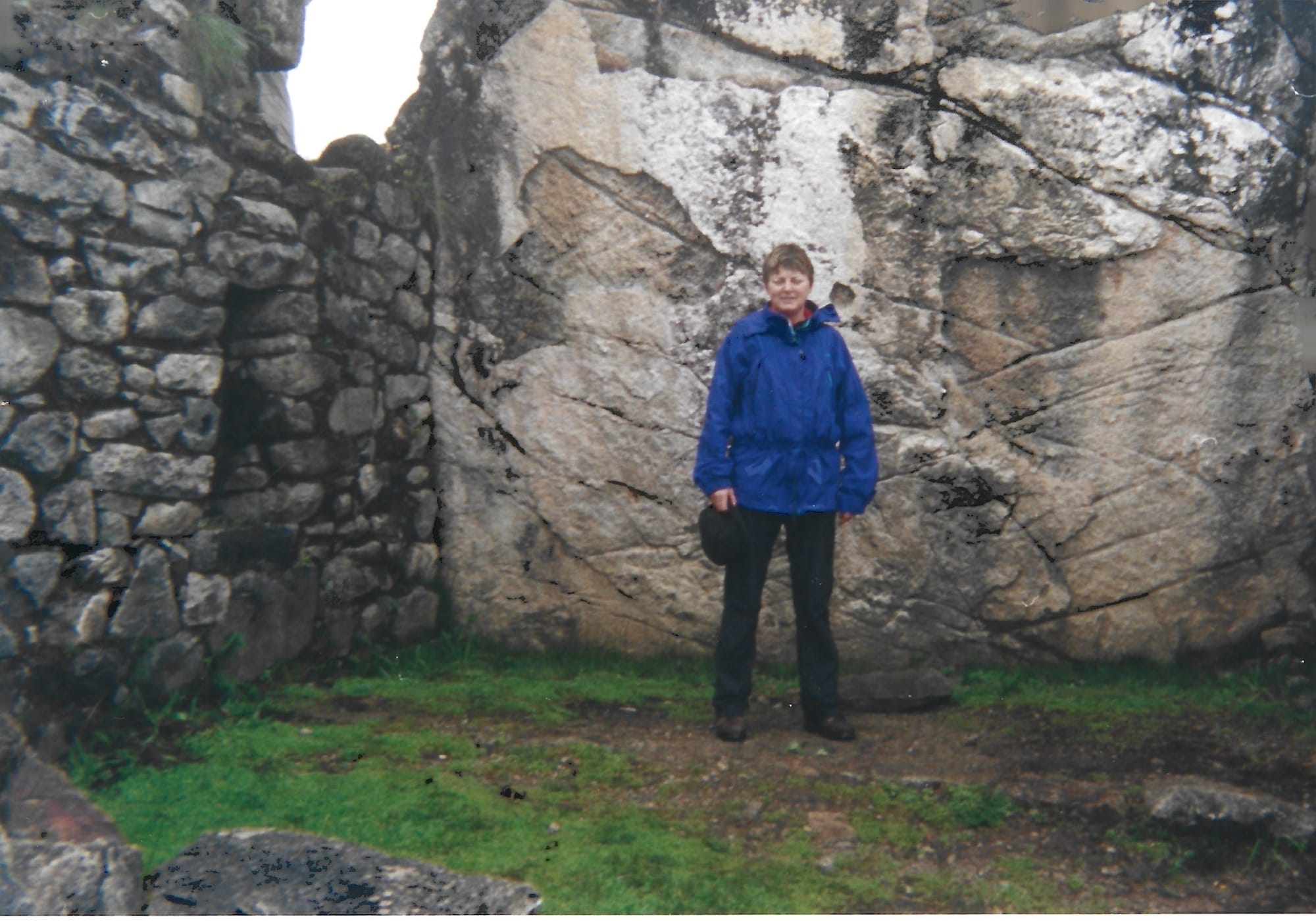
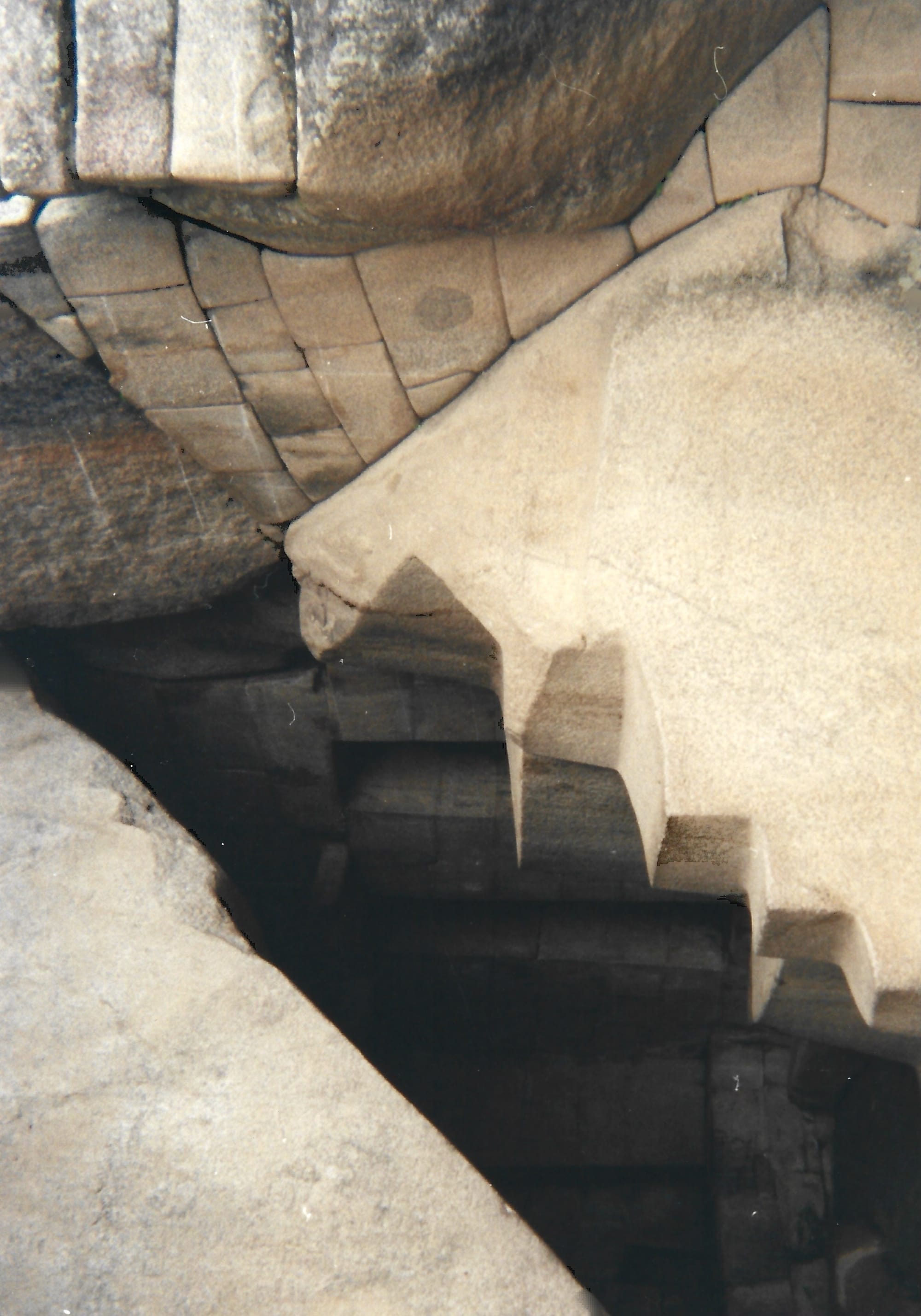
One of the most striking spots was the Temple of the Condor, where the Incas shaped the natural rock into the outstretched wings and beak of the sacred bird. It was incredible to get that close to something carved so precisely, knowing it had survived centuries of weather and earthquakes.
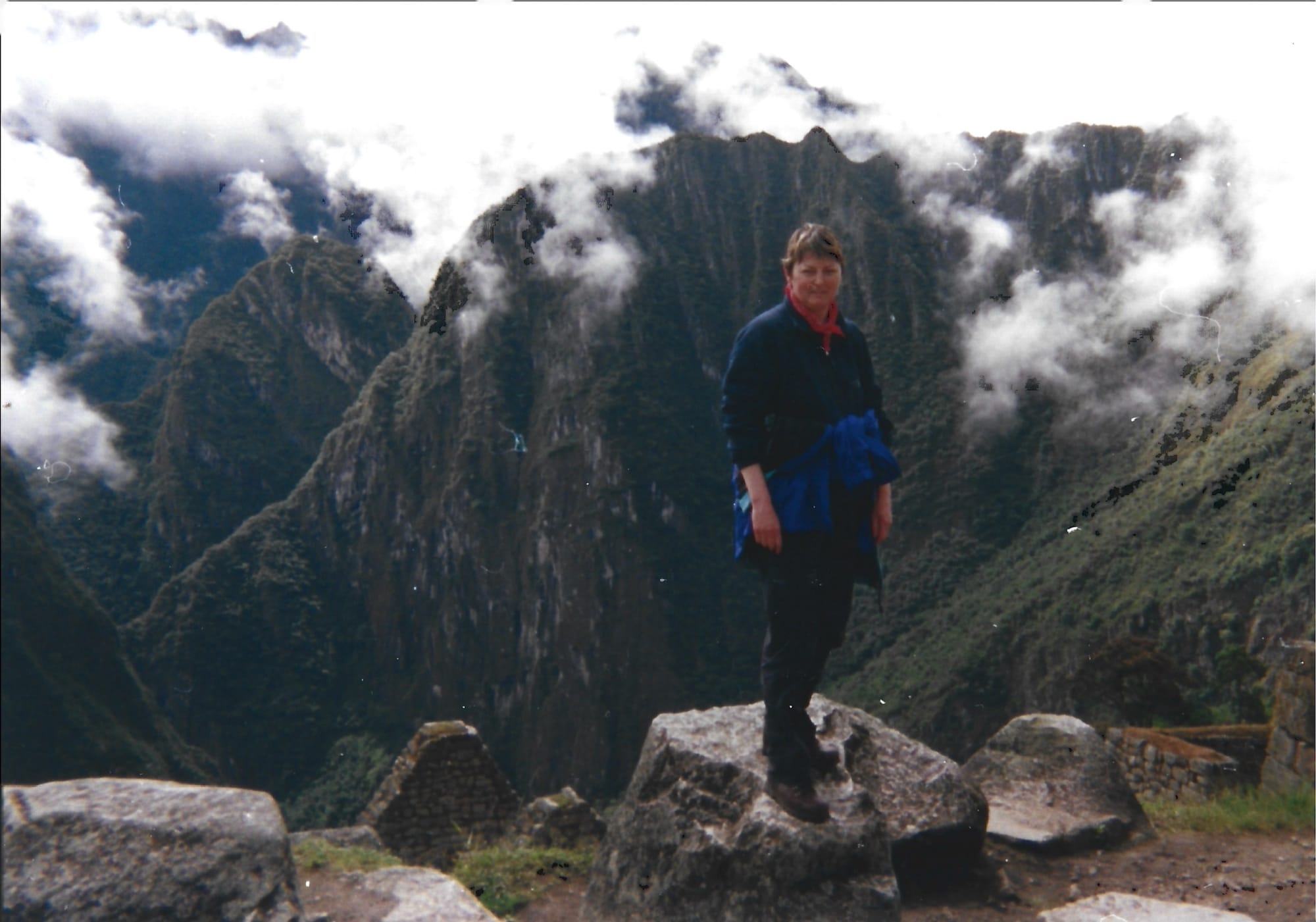
Later, we climbed up to some of the higher viewpoints for a last look over the ruins. Clouds clung to the cliffs around us and the mountains rose straight up on all sides — it really made you feel how remote and hidden the place is. Definitely one of those “we actually made it” moments.
After exploring the site for a few hours, we headed down to catch the bus. It was packed with clean, fresh trippers who’d arrived by train. Richard sniffed the air and asked, “What’s that smell?” I didn’t hesitate — “I think it’s probably us.”
The train back to Cusco was a treat — comfortable seats and big windows. At one station we bought corn on the cob from a woman boiling it in a big pot. We thought we were being sensible. We weren’t. It turned out to be a bad choice, let’s put it that way.
Back in Cusco that evening we wandered to a little local bar for food. It tasted amazing after days of trail meals, although in hindsight it may have competed with the corn for the title of “worst decision of the day.”
Watching Machu Picchu appear out of the mist felt like a gift — a reminder that some moments in life arrive quietly, then stay with you forever.
✨ Reflections
Looking back, it’s hard to believe how much we packed into those four days.
The altitude, the climbs, the endless steps — all of it pushed us, but in the best possible way.
The Inca Trail was tough, unforgettable, and absolutely worth the effort.
And the adventure didn’t end there. A couple of days later we were off again — this time on horseback into the Andes.
But that’s a story in itself, and one I’ll save for Peru – Part 2.
Member discussion